HARUS
Factor is participating in HARUS (Robotic Assistance Tool based on an understanding of the User and their Situation), an R&D&I project aimed at developing an advanced solution to improve decision-making and coordination between people, robots and digital systems in flexible industrial environments.
The initiative integrates sensor technology, collaborative robotics, artificial intelligence and manufacturing execution and operations management systems (MES/MOM) to better understand the operational context and dynamically adapt the allocation of tasks and resources.
HARUS is being developed within a consortium coordinated by the Universitat Politècnica de València (UPV), through CIGIP and ai2. Alongside Factor, the consortium includes EXOS Solutions, Xymbot Digital Solutions and the Institute of Ceramic Technology (ITC).
Challenges facing the sector
MES/MOM systems enable the management and traceability of production operations, but they have limitations when it comes to incorporating information about the operator’s situation and working environment.
Furthermore, robots can carry out tasks without access to this information, which can lead to an unbalanced allocation of tasks and limit their ability to adapt to changes on the shop floor.
HARUS addresses this challenge through a people-centred model of industrial automation.
Technological innovation
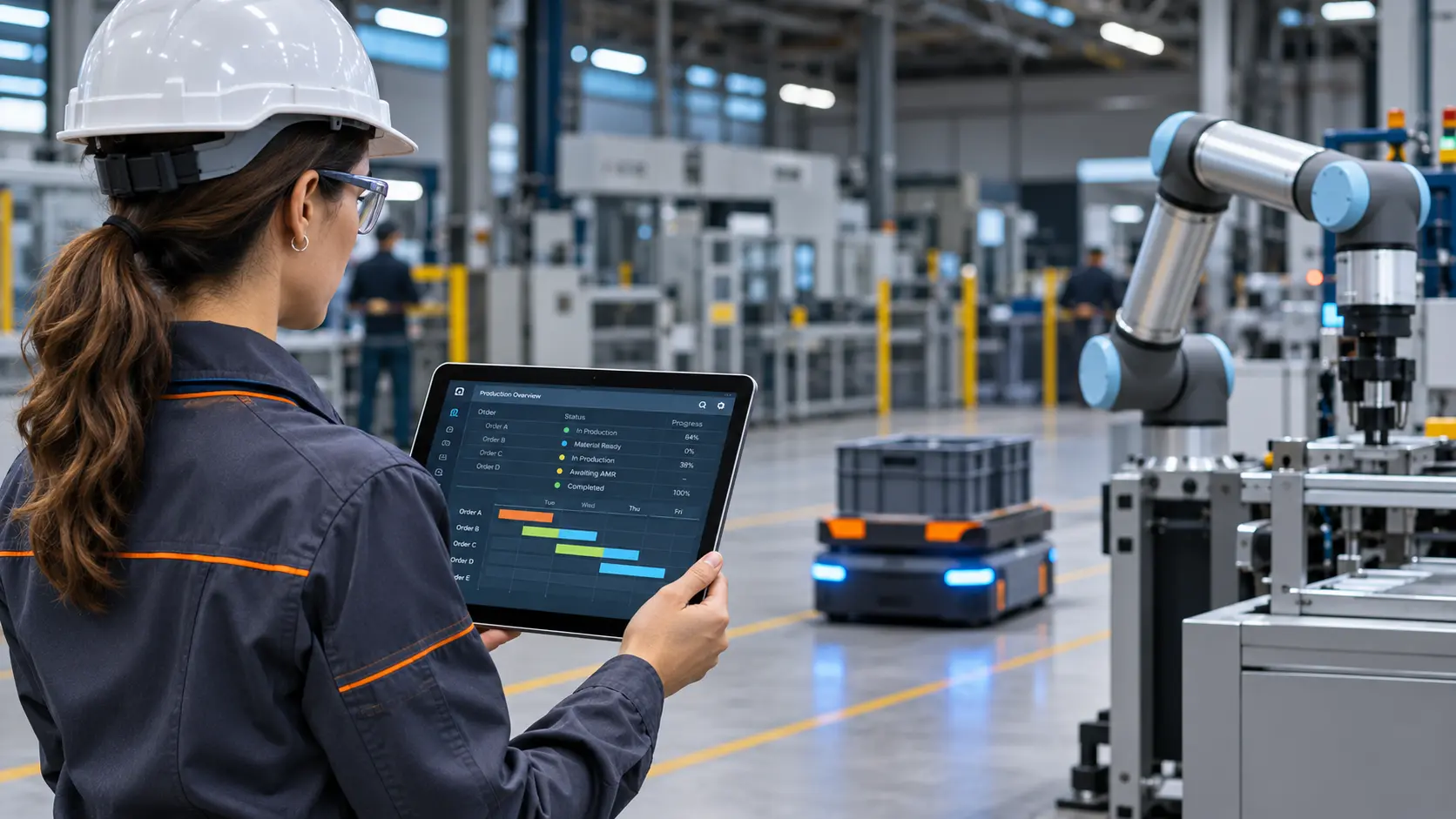
HARUS proposes integrating information from non-intrusive sensors, shop-floor activity and operations management systems to identify situations such as overloads, delays, congestion or the need for assistance.
Based on this information, the solution aims to facilitate the dynamic allocation of tasks and resources, the prioritisation of missions and the coordination of operators with autonomous mobile robots (AMRs) and other automated systems.
In contrast to rule-based models and static allocations, the project proposes incorporating a new layer of operational intelligence to interpret the shop-floor context.
Factor’s role
Within the consortium, Factor provides the main industrial validation environment for the metalworking sector, where the solution can be tested and adapted to specific manufacturing needs.
Its participation will enable the evaluation of intelligent coordination models between people, robots and digital systems in a real-world production environment.
Industrial impact
HARUS proposes an Industry 5.0 model in which digitalisation and robotics help to improve the coordination of hybrid teams comprising people, robots and digital systems.
The solution aims to improve operational efficiency and the quality of work by adapting tasks more dynamically to actual operating conditions.
Through its participation in HARUS, Factor reinforces its commitment to a people-centred Industry 5.0.
Further information on the HARUS project.